Product
APFC panels
An APFC panel automatically switches capacitor banks in stages to hold an installation close to unity power factor. That removes reactive-power penalties from the electricity board, lowers current in cables and transformers, and on most industrial loads repays its cost within six to twelve months.
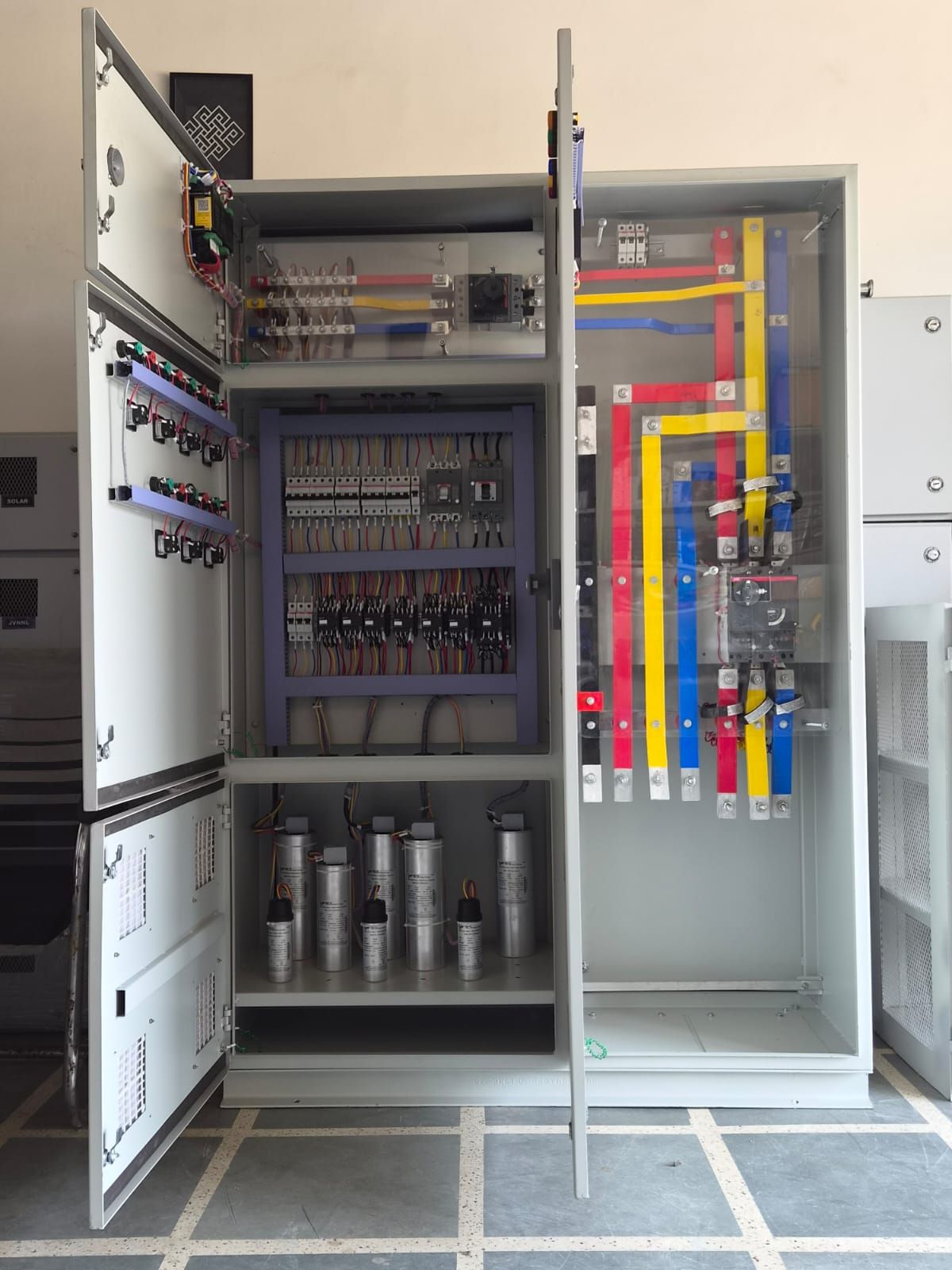
Specifications
| Range | 20 to 2000 kVAR |
|---|---|
| Control | Microprocessor relay |
| Target power factor | 0.99 |
| Capacitors | MPP / APP technology |
| Harmonics | Detuned harmonic filter options |
| Cooling | Forced air |
| Standards | IS 8623 / IEC 61439 |
Options
- Detuned reactors for harmonic-rich loads
- Real-time power factor monitoring display
- Thyristor switching for fast-changing loads
Where it is used
- Manufacturing plants with fluctuating motor loads
- Commercial buildings and malls on HT connections
- Hospitals and institutions facing power factor penalties
Standards
IS 8623 · IEC 61439
From our shop floor
Recent APFC panels built at our Jaipur works.
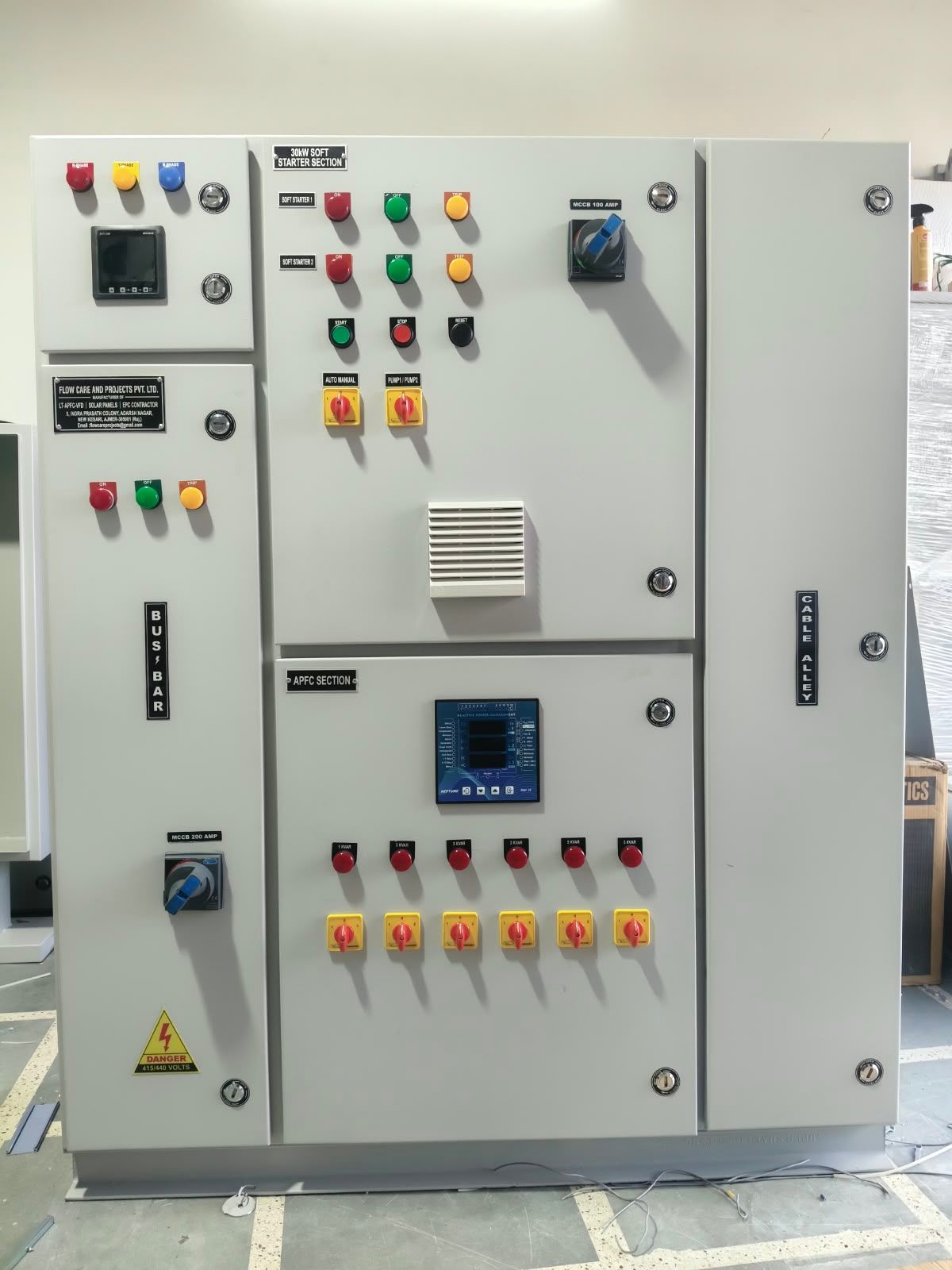
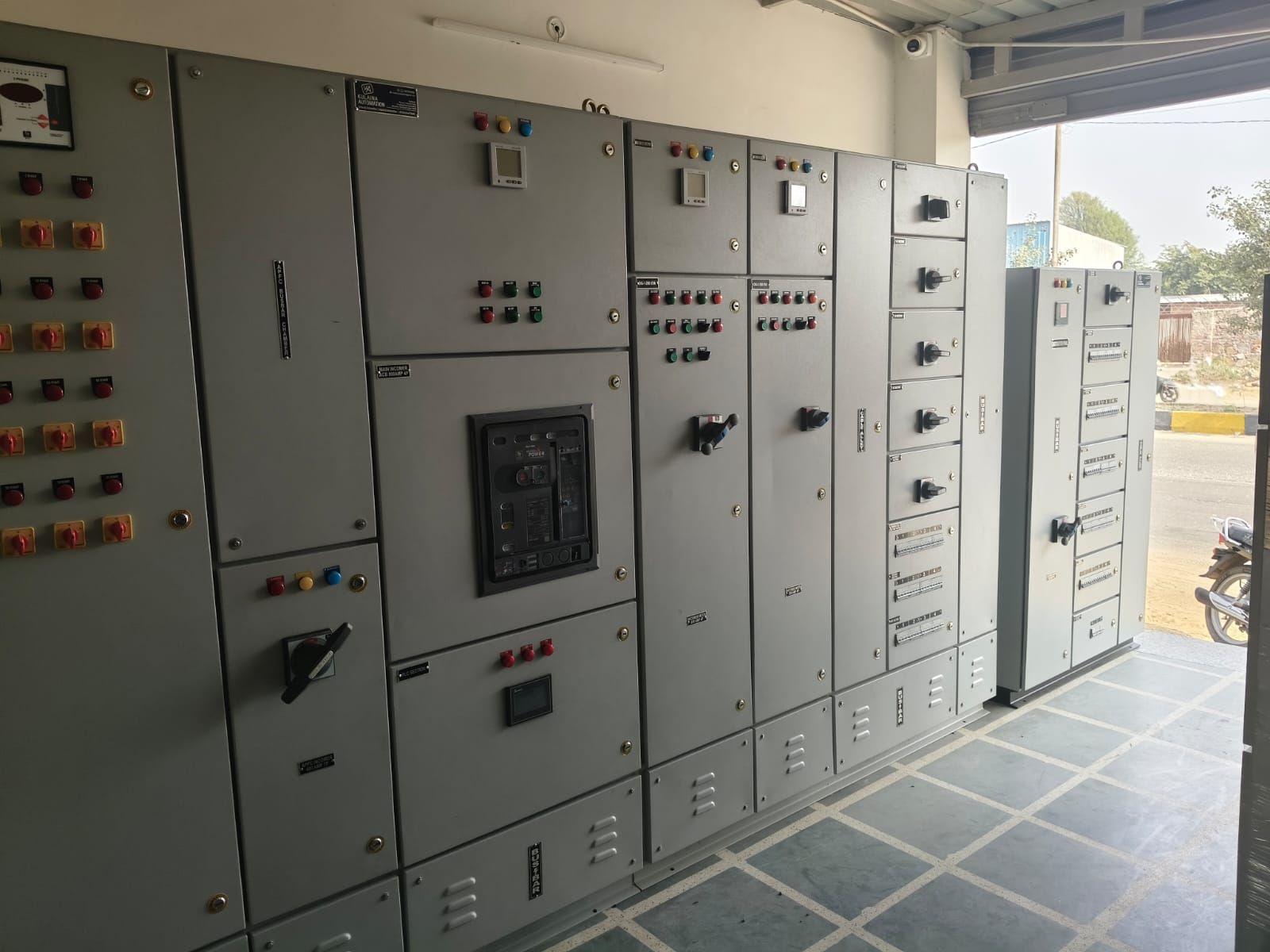
Industrial loads fluctuate, and when power factor drops the electricity board adds penalties to the bill. A Kulaina APFC panel measures power factor continuously and switches capacitor stages in and out to keep it close to unity.
Frequently asked questions
How long does an APFC panel take to pay back?
Most industrial clients recover the cost within 6 to 12 months through lower bills and removed power factor penalties. Payback depends on your tariff, load profile and current power factor.
How do I size an APFC panel?
Required kVAR equals load in kW multiplied by the difference between the tangents of the current and target power factor angles. Use our kVAR calculator for an estimate; final sizing needs a site study.
When do I need a detuned APFC panel?
When the load includes VFDs, UPS systems or other non-linear equipment that create harmonics. Detuned reactors protect the capacitors and avoid resonance.
Discuss your panel requirement
Send your single-line diagram, BOQ or tender reference. An engineer replies within one working day.